




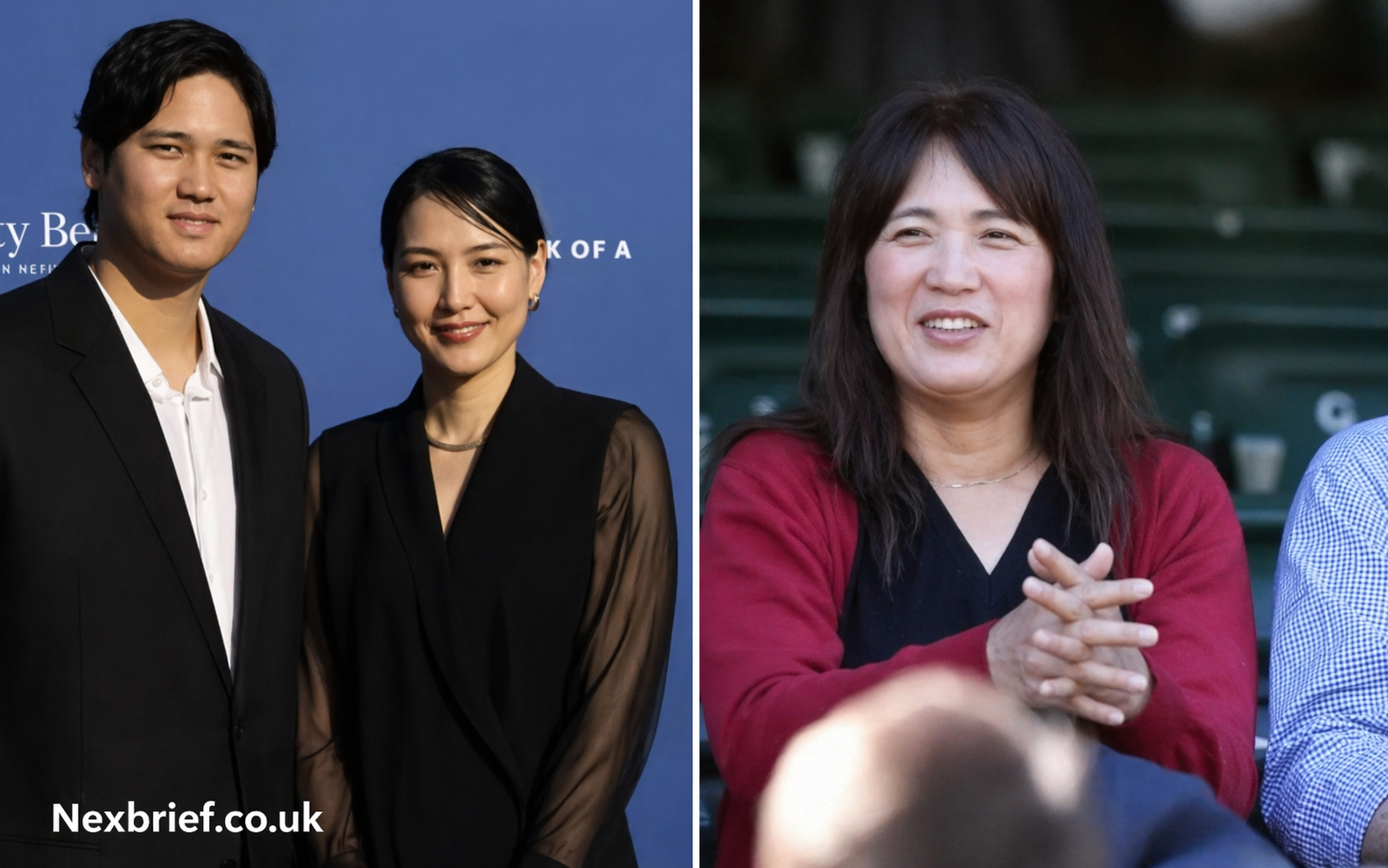
Kayoko Ohtani: The Badminton Champion Who Raised Baseball’s Greatest Two-Way Star
The Forgotten Athlete in the Ohtani Household
Kayoko Ohtani is often introduced simply as the mother of Shohei Ohtani, the Los Angeles Dodgers sensation who pitches and hits at an elite level. However, reducing her identity to that single role ignores a rich personal history of athletic achievement. Before she changed diapers and packed school lunches, Kayoko was a fierce competitor on the badminton court, having reached the national level in Japan. This accomplishment is no small feat in a country where badminton enjoys a dedicated following and produces world-class talent. Her ability to compete against the best players in Japan required years of rigorous training, mental fortitude, and an intimate understanding of high-pressure sports environments.
What makes Kayoko’s story particularly compelling is how she seamlessly transitioned from being a competitor to being the backbone of a sports family. She did not simply watch her husband Toru coach their children; she actively participated in their physical education using principles drawn from her own badminton experience. The fast-twitch reactions needed to return a smash in badminton are remarkably similar to the split-second decisions required to hit a ninety-five mile per hour fastball. Kayoko understood this connection intuitively, and she used her knowledge to complement Toru’s baseball-specific instruction. In doing so, she created a holistic athletic upbringing for Shohei and his siblings that few families can replicate.
The public rarely sees Kayoko giving interviews or seeking attention, which has only added to the mystique surrounding her influence. She represents a specific kind of strength found in many Japanese mothers of elite athletes, a quiet resilience that does not demand praise but simply delivers results. While Shohei signs record-breaking contracts worth seven hundred million dollars, Kayoko remains in her hometown of Oshu, living a life that looks remarkably similar to how it did before her son became a global icon. This groundedness is perhaps her greatest gift to Shohei, providing him with an anchor of normalcy in a storm of fame and expectation. Her story deserves to be told not as a footnote to her son’s career but as a powerful narrative of athletic motherhood.
From Competitive Badminton to Parenting a Prodigy
The transition from national-level badminton player to full-time mother required Kayoko Ohtani to channel her competitive energy into a different kind of victory. She traded shuttlecocks for baby bottles, but she never lost the mindset of an athlete. When Shohei was born in 1994, Kayoko recognized early signs of unusual athletic potential. He was energetic, coordinated, and eager to mimic the movements of adults around him. Rather than enrolling him in formal baseball lessons at an unreasonable age, she introduced him to badminton, the sport she knew best. This decision proved to be a masterstroke because it allowed Shohei to develop fundamental athletic skills without the pressure of organized baseball.
Kayoko would take young Shohei to the badminton hall where she once trained, and he would swing the racquet with surprising natural ability. She has recounted in rare interviews that even at three or four years old, he could make contact with the shuttlecock consistently, a sign of extraordinary hand-eye coordination. These early sessions were never about creating a champion; they were about sharing a mother’s passion with her child. Yet the unintended consequence was that Shohei built a neural foundation for racket sports that later transferred seamlessly to baseball. The wrist snap required for a badminton clear is almost identical to the wrist action needed for a powerful baseball swing. Kayoko did not plan to create a baseball superstar, but her instincts as a former athlete guided her toward activities that would serve her son well.
As Shohei grew older and committed to baseball, Kayoko stepped back from being a coach and became a supporter. However, her competitive nature never disappeared. The famous story of Shohei admitting he has never beaten his mother in badminton reveals more than just playful family banter. It demonstrates that Kayoko maintained her athletic edge even while raising three children and managing a household. She did not let her skills deteriorate, and she certainly did not let her famous son win out of pity. This refusal to surrender taught Shohei an invaluable lesson about competition. No matter how successful you become, someone in your family can still humble you. That lesson in humility has stayed with Shohei throughout his MLB career, visible in his respectful demeanor toward opponents and teammates alike.
The Unique Physical Skills Passed from Mother to Son
Badminton and baseball may appear to live in different athletic universes, but Kayoko Ohtani understood their shared biomechanical principles. Badminton requires explosive lateral movement, rapid changes of direction, and precise timing at the moment of impact. These are the exact same physical demands placed on a baseball hitter facing a slider or a pitcher fielding a comeback ground ball. By exposing Shohei to badminton from a very young age, Kayoko helped him develop neural pathways that traditional baseball training might have ignored. The result is an athlete whose movement patterns seem almost superhuman because they draw from a broader athletic vocabulary than most of his peers.
The rotational power that allows Shohei to hit baseballs over four hundred feet has clear origins in badminton mechanics. A powerful badminton smash involves a full rotation of the torso, weight transfer from the back foot to the front foot, and a violent snap of the wrist at the point of contact. This is biomechanically identical to a high-level baseball swing. Kayoko taught Shohei these movements before he ever held a baseball bat seriously. When he eventually stepped into a batter’s box, his body already knew how to generate power efficiently. This head start gave him an advantage that cannot be taught later in life, a foundational efficiency that separates good hitters from generational talents.
Furthermore, badminton improved Shohei’s visual acuity in ways that directly benefit his pitching. In badminton, the shuttlecock travels at high speeds and changes direction unpredictably. A player must track the object, predict its trajectory, and position their body accordingly in a fraction of a second. This trains the visual cortex to process fast-moving objects with remarkable precision. When Shohei stands on the pitching mound, he uses this same visual training to read the batter’s reactions and adjust his release point. He also uses it when hitting, picking up spin rates and release points that other batters miss. Kayoko never formally studied sports science, but her intuition as an athlete led her to provide Shohei with exactly the cross-training his developing brain needed to excel at the highest level.
Life in Oshu and the Ohtani Family Values
The city of Oshu in Iwate Prefecture is known for cold winters, rice fields, and a slow pace of life far removed from the energy of Tokyo. This is where Kayoko Ohtani chose to raise her three children, Ryuta, Shohei, and Yuka. The decision to stay in a rural community rather than move to a baseball academy hub reflects the family’s priorities. Kayoko and Toru valued stability, community, and a childhood that was not solely defined by sports. Shohei walked to school, played with neighborhood friends, and experienced the same seasonal rhythms as his classmates. This normal upbringing provided emotional security that later helped him handle the immense pressures of professional baseball in two different countries.
Kayoko managed the household with the same discipline she once applied to badminton training. Meals were prepared on schedule, homework was checked, and chores were assigned fairly. Toru worked at a local Mitsubishi factory, so much of the daily childcare fell to Kayoko. She balanced this responsibility while also maintaining her own identity as a former athlete, occasionally playing badminton for exercise and community events. Her children witnessed a mother who was competent, strong, and independent. This modeling of adult behavior is often overlooked in discussions of athletic parenting, but it is critically important. Shohei did not just learn how to swing a bat from his parents; he learned how to be a responsible, hardworking human being who respects others.
The Ohtani household was not strictly a baseball factory. Kayoko encouraged all three children to explore different activities and find their own paths. Ryuta pursued baseball and later became a corporate league player and coach. Yuka chose a quieter life away from public attention. Shohei was the one who fell deeply in love with baseball, but he did so without coercion. Kayoko’s approach allowed each child to develop organically. She did not force Shohei to practice when he was tired, nor did she push him into tournaments he did not want to play. Instead, she created an environment where excellence was celebrated but not demanded. This subtle distinction is crucial because it preserved Shohei’s intrinsic love for the game, the internal fire that drives him to train obsessively as an adult without any external pressure.
The Partnership with Toru Ohtani in Raising a Star
Kayoko and Toru Ohtani developed a parenting partnership that divided responsibilities according to their strengths. Toru, having played baseball in Japan’s industrial leagues, took charge of the technical side of Shohei’s development. He taught proper pitching mechanics, batting stance adjustments, and the rules of the game. Kayoko, drawing from her badminton background, focused on the broader athletic qualities of agility, reaction time, and mental composure. Neither parent overstepped the other’s domain, creating a seamless coaching environment for young Shohei. This collaboration extended to the famous notebook Toru kept for his son, filled with handwritten advice about running hard, staying energetic, and respecting the game. Kayoko reinforced these messages daily, ensuring they became internalized principles rather than forgotten notes.
The balance between the two parents was particularly evident during Shohei’s high school years when recruitment pressure intensified. Toru was more involved in the strategic decisions about which high school offered the best baseball development. Kayoko paid closer attention to the school’s academic environment, the quality of dormitory life, and the emotional support systems available for a teenager living away from home. Both perspectives were necessary for a healthy decision. When Shohei ultimately chose Hanamaki Higashi High School and later decided to join the Hokkaido Nippon-Ham Fighters directly rather than pursue an immediate MLB move, these choices reflected input from both parents. Toru provided the baseball logic, and Kayoko provided the life logic.
Kayoko’s role as the emotional anchor became even more critical when Shohei suffered major injuries, including Tommy John surgery. During these difficult periods, Toru could analyze the medical reports and rehabilitation timelines. Kayoko focused on Shohei’s mental health, ensuring he remained positive and patient through the long months of recovery. She reminded him that setbacks are part of every athlete’s journey, drawing from her own experience of losing matches despite perfect preparation. This emotional resilience training is something no baseball coach can provide. It comes from a mother who has competed and lost and learned to try again. Shohei’s ability to return from injuries stronger than before is a testament to Kayoko’s influence as much as any physical therapy or surgical technique.
Maintaining Privacy While Raising a Global Icon
In an era where sports parents often seek reality television deals and social media fame, Kayoko Ohtani has chosen a radically different path. She has no public Instagram account, no Twitter feed, and no agent shopping her story to magazines. When Shohei plays home games in Los Angeles, Kayoko and Toru occasionally attend, but they sit quietly in the stands, wearing ordinary clothing and cheering without fanfare. This refusal to monetize or dramatize her role as the mother of a superstar is refreshing and culturally significant. Kayoko represents a traditional Japanese value of humility, where individual achievement is secondary to collective harmony and family honor. She does not need to be seen to be effective.
The few times Kayoko has spoken to the media offer rare windows into her personality and philosophy. She speaks warmly of Shohei’s childhood, laughing about his endless energy and his insistence on bringing badminton equipment everywhere. She deflects praise for his success back onto Shohei and his coaches, never claiming credit for his achievements. When asked about his historic two-way performances, she responds with maternal concern rather than statistical analysis, hoping he stays healthy and happy. These interviews reveal a woman who is genuinely uninterested in the spotlight. Her joy comes from her son’s well-being, not his fame. This attitude has allowed Shohei to grow into an adult who values substance over image, a rarity in modern professional sports.
Kayoko’s decision to remain in Japan rather than relocate to the United States has also been deliberate. She understands that Shohei needs to build his own life as an adult, separate from his parents. By staying in Oshu, she and Toru have given their son the freedom to mature independently while knowing he has a safe home to return to during offseasons. This spatial boundary is healthy for any family, but it is especially important for the family of a global superstar who faces immense external demands. Kayoko has navigated this transition from active parent to supportive observer with grace, proving that a mother’s influence does not require daily proximity. The values she instilled during Shohei’s childhood operate independently now, guiding him through every at-bat and every pitch thousands of miles away from her kitchen table.
Read More: Nathaneal Spader: The Private Life of James Spader’s Youngest Son
The Lasting Influence on Shohei’s Character and Work Ethic
Shohei Ohtani is famous not only for his unprecedented skills but also for his exemplary character. He speaks respectfully to umpires, signs autographs for fans, and never blames teammates for losses. These behaviors are not accidental; they were modeled and taught by Kayoko and Toru from the earliest age. Kayoko emphasized that being a good person was more important than being a good baseball player. She taught Shohei to bow to opponents, to thank coaches, and to clean up after himself in locker rooms. These small courtesies accumulate into a reputation for class and sportsmanship that has made Shohei one of the most beloved athletes in the world. His character is a direct reflection of his mother’s values.
The legendary work ethic that drives Shohei to train for hours on pitching, hitting, and conditioning also has maternal roots. Kayoko was not a naturally gifted badminton player who coasted on talent. She worked extremely hard to reach the national level, practicing drills until her body ached and her mind tired. She brought this same work ethic to parenting, waking early to prepare meals, managing schedules, and maintaining a clean home. Young Shohei watched his mother work diligently without complaint, and he internalized that example. When he decided to pursue baseball seriously, he approached practice with the same quiet determination he had observed in Kayoko. He did not need to be told to work hard; he had seen hard work modeled every day of his childhood.
Perhaps the most underrated aspect of Kayoko’s influence is her teaching of how to handle failure. In baseball, even the best hitters fail seventy percent of the time. This mathematical reality can crush a player’s confidence without proper psychological training. Kayoko, through her badminton career, understood that losing points and matches is inevitable. She taught Shohei to view failure as information rather than identity. A strikeout is not a judgment on his worth as a person; it is simply a data point to analyze and improve upon. This growth mindset allows Shohei to walk back to the dugout after a bad at-bat with the same calm expression he wears after a home run. Emotional stability at that level is rare, and it is a gift from a mother who knew how to lose gracefully before she ever knew how to win publicly.