
Table of Contents
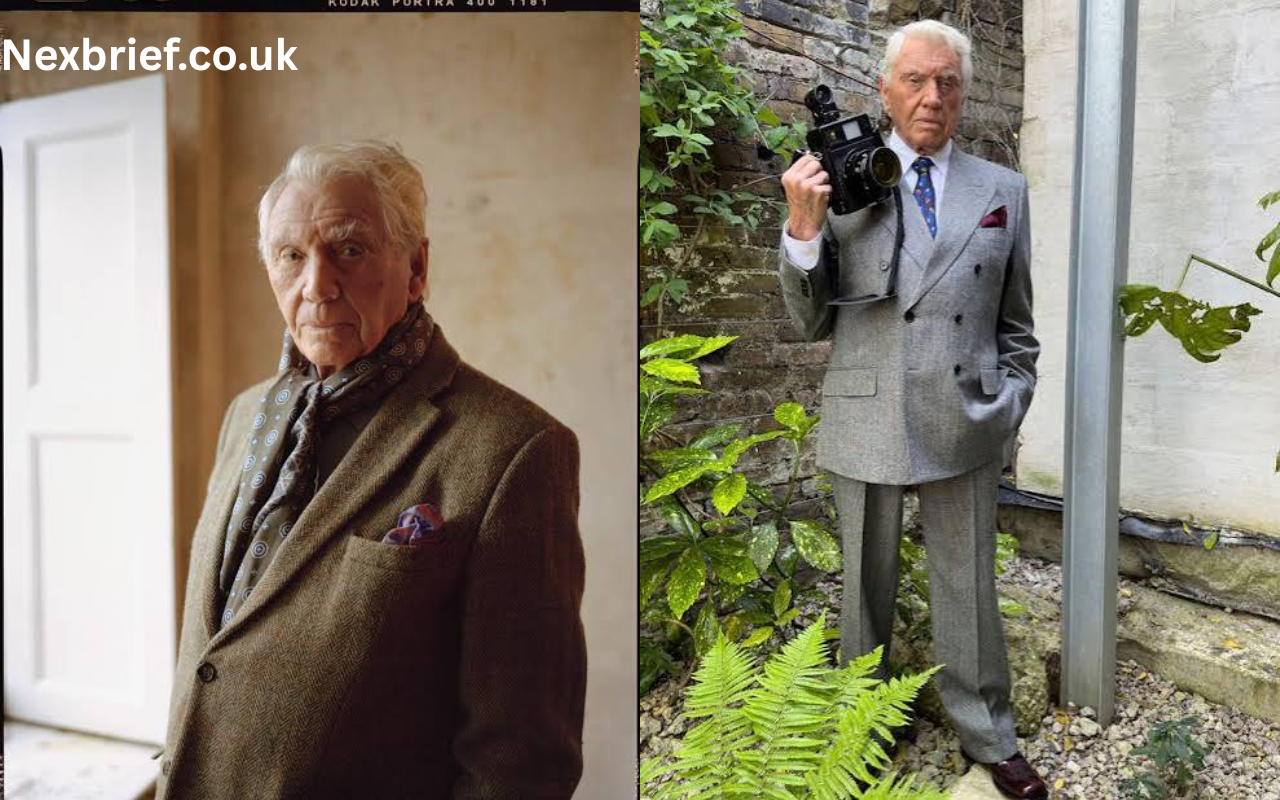
ToggleWar changes lives forever, but only a handful of photographers have managed to show the world its true human cost with honesty, compassion, and courage. Sir Don McCullin is one of those rare individuals. For more than six decades, he has documented wars, humanitarian crises, poverty, displacement, and social injustice through powerful black-and-white photography that has become part of modern history. His unforgettable images from Vietnam, Biafra, Northern Ireland, Cyprus, Lebanon, and many other conflict zones have influenced generations of photographers, journalists, and human rights advocates.
Unlike many photographers who focused on military victories or political leaders, McCullin always pointed his camera toward ordinary people caught in extraordinary circumstances. His photographs reveal fear, grief, hope, survival, and dignity, making viewers feel connected to people living through unimaginable hardships. His work has appeared in leading newspapers, magazines, museums, and galleries around the world, earning him recognition as one of the greatest documentary photographers of all time.
Today, even in his nineties, Don McCullin continues to inspire audiences through exhibitions, books, and interviews. His remarkable journey from a poor London neighborhood to becoming one of Britain’s most celebrated photojournalists proves that courage, empathy, and dedication can create a lasting legacy that reaches far beyond the camera lens.
Don McCullin Quick Facts
| Fact | Details |
|---|---|
| Full Name | Sir Donald McCullin |
| Known As | Don McCullin |
| Date of Birth | 9 October 1935 |
| Age | 90 (as of 2026) |
| Birthplace | St Pancras, London, England |
| Nationality | British |
| Profession | Photojournalist, Documentary Photographer, Author |
| Famous For | War Photography, Documentary Photography |
| Parents | Father deceased during McCullin’s youth; parents’ names not widely published |
| Siblings | Not publicly documented |
| Education | Hammersmith School of Arts and Crafts (briefly attended) |
| Marital Status | Married |
| Spouse | Catherine Fairweather |
| Children | Five |
| Residence | Somerset, England |
| Estimated Net Worth | Approximately $2–5 million (estimated) |
| No verified personal account | |
| X (Twitter) | No verified personal account |
| No verified personal profile | |
| Official Website | DonMcCullin.com |
Early Life and Childhood
Don McCullin was born on 9 October 1935 in St Pancras, London, during a difficult period in British history. He spent much of his childhood growing up in Finsbury Park, an area that experienced severe poverty and the effects of World War II. His early years were shaped by hardship, limited opportunities, and the daily struggles faced by working-class families. These experiences later became the emotional foundation of his photography because he understood suffering long before he ever photographed it.
During the Second World War, McCullin was evacuated to the countryside in Somerset to escape the bombing of London. Like many children of his generation, he witnessed the uncertainty and fear caused by war from an early age. Returning to London after the conflict, he found a city still recovering from destruction. The bomb-damaged streets, struggling neighborhoods, and resilient communities around him left a deep impression that stayed with him throughout his life.
Although he showed artistic talent, formal education was not easy. McCullin briefly attended Hammersmith School of Arts and Crafts after winning a scholarship, but financial hardship forced him to leave school at just fifteen years old following his father’s death. Without qualifications, he began working to support himself, a decision that reflected the realities faced by many young people in post-war Britain.
Education, National Service, and Discovering Photography
Don McCullin’s path into photography was anything but traditional. After leaving school, he worked several ordinary jobs, including a catering position with British Railways and later at an animation studio where he mixed paints. Although these jobs paid the bills, they did little to satisfy his creative ambitions. At that stage of his life, photography was not yet a career goal but simply an interest waiting to be discovered.
A turning point came when he completed his National Service with the Royal Air Force during the 1950s. While serving, he worked as a photographic assistant in aerial reconnaissance. The military introduced him to cameras, film processing, and photographic techniques that would become the foundation of his future profession. More importantly, he learned discipline, patience, and the importance of documenting events accurately—qualities that later defined his photojournalism.
When McCullin returned to London, he purchased a twin-lens Rolleicord camera. He began taking photographs around his local neighborhood, often documenting everyday life in North London. Without realizing it, he was developing a style that combined technical excellence with deep emotional storytelling, a signature approach that would eventually make him one of the world’s most respected documentary photographers.
The First Break That Changed His Life
Like many successful careers, Don McCullin’s breakthrough arrived unexpectedly. In 1959, he photographed a notorious North London street gang known as The Guv’nors, many of whom were his childhood friends. Shortly after the photographs were taken, one gang member was accused of murdering a police officer, and newspapers became interested in images of the group. McCullin’s photographs were published by The Observer, instantly introducing his work to a national audience.
The publication of those photographs earned him his first professional assignment. Editors quickly recognized that McCullin possessed a rare ability to capture authentic human emotion rather than staged scenes. His images felt honest, direct, and deeply personal, qualities that separated him from many photographers of the time. This opportunity marked the beginning of a career that would span more than six decades.
Only two years later, McCullin traveled to Berlin to photograph the construction of the Berlin Wall. His powerful photo essay won the prestigious British Press Award in 1961 and established him as one of Britain’s rising photojournalists. It demonstrated that he could cover major international events with sensitivity, precision, and exceptional visual storytelling.
Becoming One of the World’s Greatest War Photographers
Don McCullin’s first experience covering an armed conflict came in Cyprus in 1964, where fighting had broken out between Greek and Turkish Cypriot communities. Instead of focusing solely on military operations, he photographed frightened families, displaced civilians, injured children, and exhausted soldiers. His compassionate approach earned him the World Press Photo of the Year award and launched his international reputation.
In 1966, McCullin joined The Sunday Times Magazine, one of the world’s leading publications for international reporting. During the following eighteen years, he covered nearly every major conflict of his era. His assignments took him to Vietnam, Cambodia, Biafra, Congo, Uganda, Lebanon, Jordan, Israel, Afghanistan, Northern Ireland, Chad, and many other regions affected by war, famine, and political violence. His willingness to work on the front lines often placed his own life in extreme danger.
Unlike photographers seeking dramatic battle scenes, McCullin concentrated on the human consequences of conflict. His unforgettable black-and-white images of starving children during the Biafran famine, shell-shocked American Marines during the Vietnam War, grieving families in Lebanon, and civilians trapped by violence remain among the most influential photographs in the history of journalism. These images continue to be studied by photographers, historians, and journalism students around the world because they remind viewers that war affects ordinary people most deeply.
The Vietnam War and the Photographs That Defined a Generation
Among all the conflicts Don McCullin covered, the Vietnam War became the defining chapter of his career. Between the mid-1960s and early 1970s, he made numerous trips to Vietnam, often traveling alongside American Marines and South Vietnamese forces. He worked under constant threat from sniper fire, artillery bombardments, and aerial attacks, yet he remained committed to documenting the reality of the war rather than its politics. His photographs captured moments that newspapers could describe only with words but that his camera made impossible to ignore.
One of his most iconic images is the haunting portrait of a shell-shocked U.S. Marine during the Battle of Huế in 1968. The soldier’s exhausted eyes and expression of trauma came to symbolize the psychological cost of war. Unlike staged military photographs, McCullin’s work showed fear, confusion, grief, and exhaustion. These deeply emotional images helped audiences around the world understand that war was not simply about victories and defeats—it was about human lives forever changed.
McCullin has often reflected that, despite the worldwide attention his photographs received, he sometimes questioned whether they truly changed the course of history. Even so, historians, journalists, and photography experts widely acknowledge that his Vietnam images remain among the most influential photographs ever produced. In 2026, he announced what he described as his final major book, Vietnam, bringing together many previously unpublished photographs from the conflict and offering fresh insight into one of the defining moments of his career.
Covering Humanitarian Crises Beyond the Battlefield
Although Don McCullin is best known as a war photographer, much of his work focused on humanitarian disasters rather than combat itself. During the Nigerian Civil War, he documented the devastating famine in Biafra, where thousands of children suffered from severe malnutrition. His heartbreaking photographs exposed the scale of the crisis to an international audience and remain among the most powerful visual records of human suffering ever created.
McCullin also reported from countries including Lebanon, Cambodia, Bangladesh, Uganda, Jordan, Congo, and Ethiopia. Wherever he traveled, he sought out ordinary people living through extraordinary hardship. Refugees searching for safety, parents mourning lost children, injured civilians, and communities struggling to rebuild after violence became the true subjects of his work. Rather than portraying them as victims alone, he photographed them with dignity, respect, and compassion.
Several qualities distinguish McCullin’s documentary photography:
- Deep empathy for the people he photographed.
- Honest storytelling without unnecessary dramatization.
- Technical mastery of black-and-white photography.
- A lifelong commitment to revealing social injustice.
These principles helped establish him as one of the most respected documentary photographers in modern history.
Life Beyond War Photography
After decades spent documenting conflict, Don McCullin gradually shifted his attention toward quieter subjects. Beginning in the 1980s, he devoted more time to photographing the English countryside, ancient architecture, landscapes, still lifes, and cultural heritage across Europe, India, Indonesia, and Africa. While these images differ greatly from his wartime photographs, they share the same careful composition and emotional depth that define his artistic vision.
Living in Somerset brought McCullin a sense of peace after years of witnessing violence around the world. He has often spoken about how photographing the changing seasons, mist-covered fields, and ancient ruins helped restore emotional balance following decades spent in dangerous conflict zones. These later works demonstrate another side of his creativity, showing that beauty and tranquility can be just as meaningful as dramatic historical events.
His photography of Roman sculptures and archaeological sites has received widespread praise in recent years. Rather than viewing statues as lifeless objects, McCullin sees them as silent witnesses to history, carrying stories of civilizations, conflict, and endurance. This thoughtful perspective has expanded his reputation beyond journalism into the wider world of fine art photography.
Awards, Honors, and Lasting Recognition
Throughout his remarkable career, Don McCullin has received many of photography’s highest honors. In 1964, he won the prestigious World Press Photo of the Year for his coverage of the conflict in Cyprus, confirming his status as one of the world’s leading photojournalists. Over the following decades, his work continued to earn international acclaim from museums, universities, and professional organizations.
In 1993, McCullin became the first British photojournalist to receive the title of Commander of the Order of the British Empire (CBE) for his outstanding contribution to photography. His achievements were recognized again in 2017 when he was knighted for services to photography, officially becoming Sir Don McCullin. Later honors included the International Center of Photography Lifetime Achievement Award, the Bodley Medal: Life and Work, and numerous honorary fellowships celebrating his extraordinary influence on visual journalism.
Among his most notable recognitions are:
- World Press Photo of the Year (1964)
- Commander of the Order of the British Empire (1993)
- Knighthood for Services to Photography (2017)
- International Center of Photography Lifetime Achievement Award (2020)
- Bodley Medal: Life and Work (2025)
These honors reflect not only his technical excellence but also his lifelong commitment to documenting humanity with honesty and compassion.
Personal Life, Family, and the Values That Guide Him
Despite spending much of his life in the public eye, Don McCullin has always remained a remarkably private individual. He has preferred to let his photographs speak for themselves rather than seek celebrity status. Over the years, he has spoken openly about the emotional burden of documenting war, admitting that many of the tragedies he witnessed stayed with him long after he returned home. Rather than hiding these experiences, he has used them to encourage greater awareness of the psychological impact of conflict on journalists and photographers.
McCullin is married to Catherine Fairweather, and together they have built a quiet life in Somerset, England. He is also a father of five children. Living in the countryside has given him the opportunity to step away from the dangers of war zones and focus on nature, gardening, and landscape photography. He has often described the peaceful English landscape as a source of healing after decades spent photographing violence and human suffering.
His personal philosophy has remained remarkably consistent throughout his career. McCullin believes photography should tell the truth, preserve history, and encourage compassion rather than simply entertain. This commitment to honesty has earned him enormous respect among journalists, documentary photographers, and historians who regard him as a moral voice within the profession.
Net Worth, Income Sources, and Professional Success
Although Don McCullin never pursued photography for financial reward, his extraordinary career has brought both recognition and commercial success. As of 2026, his estimated net worth is generally believed to be between $2 million and $5 million. Since McCullin has never publicly disclosed his finances, this figure remains an informed estimate based on his long professional career, published books, exhibitions, licensing, and photography sales.
His income comes from several respected sources rather than commercial endorsements. Fine art collectors regularly purchase limited-edition prints of his famous photographs, while museums and galleries worldwide continue to organize exhibitions of his work. His bestselling books—including Unreasonable Behaviour, Don McCullin, The Destruction Business, and Life, Death and Everything In Between—have also contributed to his earnings throughout the years.
Other important income streams include editorial licensing, documentary appearances, public lectures, interviews, and retrospective exhibitions. Unlike many modern photographers who rely heavily on advertising partnerships, McCullin has maintained an independent reputation built almost entirely on documentary journalism and fine art photography, making his career especially respected within the photography community.
Social Media Presence and Public Engagement
In today’s digital world, many photographers maintain an active presence across multiple social media platforms. Don McCullin has taken a different approach. He does not operate verified personal accounts on Instagram, X (formerly Twitter), Facebook, or LinkedIn. Instead, his work is primarily shared through official publishers, galleries, museums, exhibition organizers, and his official website.
Visitors interested in his photography can explore his extensive portfolio, books, exhibitions, and career highlights through his official website, which serves as the central source for authentic information about his work and ongoing projects. The website also provides updates on new publications, exhibitions, and selected interviews, ensuring that his legacy remains accessible to audiences worldwide.
Even without personally managing social media, McCullin’s photographs continue to reach millions of people online. Museums, photography organizations, universities, journalists, and documentary filmmakers frequently feature his images while discussing war reporting, visual storytelling, ethics in journalism, and the history of documentary photography. His influence extends across generations, proving that timeless work can remain relevant without constant online activity.
Recent Updates and Ongoing Legacy
Even in his nineties, Sir Don McCullin remains an active and influential figure in photography. His work continues to be featured in major international exhibitions, where new audiences discover the extraordinary images that defined twentieth-century photojournalism. Recent exhibitions have celebrated not only his famous war photography but also his striking landscapes, archaeological studies, and still-life photographs, demonstrating the remarkable breadth of his artistic career.
McCullin has also continued publishing books that revisit significant moments from his career while offering personal reflections on conflict, memory, and the responsibilities of documentary photography. These publications provide valuable historical context and help younger generations understand both the technical and ethical challenges faced by photographers working in dangerous environments. His interviews consistently emphasize compassion, integrity, and the importance of bearing witness to history.
Today, universities, journalism schools, museums, and photography institutions around the world study Don McCullin’s work as an example of ethical visual storytelling. His photographs are regarded not merely as works of art but as historical documents that preserve the experiences of countless individuals whose voices might otherwise have been forgotten. His influence continues to shape aspiring photographers who seek to combine technical excellence with genuine humanity.
Conclusion
Sir Don McCullin’s remarkable journey from a working-class childhood in London to becoming one of the world’s most celebrated documentary photographers is a story of courage, empathy, and unwavering commitment to truth. Throughout more than six decades, he risked his own safety to ensure that the suffering of ordinary people caught in war, famine, and humanitarian crises would never be ignored. His photographs have become lasting reminders that behind every conflict are real families, real communities, and real human lives deserving of dignity and compassion.
His achievements extend far beyond awards, exhibitions, and international recognition. Don McCullin transformed photojournalism by demonstrating that a camera could do more than document events—it could inspire understanding, challenge injustice, and preserve history for future generations. His black-and-white images remain among the most powerful visual records ever created, continuing to educate, move, and inspire audiences around the world.
As Don McCullin continues to leave an extraordinary mark on documentary photography, his life reminds us that resilience, honesty, and compassion are among the greatest qualities any individual can possess. His legacy is not measured only by the photographs he captured but by the empathy they awakened in millions of viewers. Future generations of photographers, journalists, and storytellers will continue to learn from his example, ensuring that his influence endures for many decades to come.